





Student Spotlight: Meet Lucy, an Advanced Beauty Therapy Student at University Centre Rotherham
Faces of University Centre Rotherham:
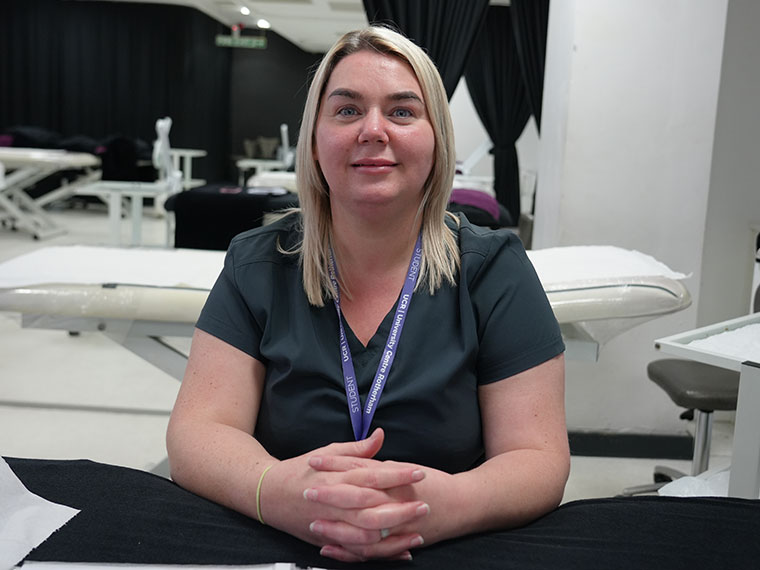
Lucy Leckenby, Level 4 Diploma in Advanced Aesthetics Treatments
After more than 25 years in the beauty industry, Lucy Leckenby knows just how much it has changed.
With advanced aesthetic treatments now in high demand, she made the decision to return to education and update her skills – all while working full-time in her current job in social care.
Now studying the Level 4 Diploma in Advanced Aesthetics Treatments at University Centre Rotherham, her journey reflects both dedication to lifelong learning and a desire to keep progressing, even when career paths evolve.
A career built on experience
Lucy, now 43, started her career in beauty at 16 when she left school, going to college for four years to train in beauty and then hairdressing.
After completing her level 3 qualification in the early 2000s, Lucy built up extensive experience over the years working her way from a salon therapist to becoming a spa manager for one of the North’s leading spas.
However, seven years ago, her career took a different direction. She moved into social care, delivering hair and beauty training to women leaving prison. This led to her current role as a service manager for a homelessness prevention charity – a role that is equally meaningful but very different from her original profession.
Why Lucy returned to education
Despite her move into social care, Lucy never lost her connection to beauty. As the industry evolved, particularly with the rise of more advanced aesthetic treatments, she recognised the importance of continuing to learn.
While she now describes it as more of a hobby alongside a career she loves, she was keen to keep her skills up to date.
“Beauty is so fast paced and always changing. It’s always been my main career so although I’m not currently working in the industry, I wanted to be aware of what’s happening, keep my skills current and stay competitive,” she explains.
Studying part-time has allowed her to balance her career while investing in her future. The level 4 diploma provides the opportunity to gain qualifications in advanced treatments such as skin needling, chemical peels and dermaplaning – areas that are increasingly in demand.
Lucy“It surprised me how supportive the tutors are and how relaxed it is here. A lot of places I’ve trained before, whether its college or product houses, it’s been very strict and stern. You don’t feel comfortable to ask questions. Whereas here, they’re a really great team and non-judgemental.”
Why Lucy chose University Centre Rotherham
Lucy’s journey with University Centre Rotherham began with a short course in microblading – a treatment she’d always wanted to train in and that isn’t offered at many places locally.
Having moved from Leeds to South Yorkshire, she was unfamiliar with the university at first, but her initial experience quickly changed that.
The welcoming environment and approachable tutors stood out, particularly compared to other training providers she had experienced in the past.
“It surprised me how supportive the tutors are and how relaxed it is here. A lot of places I’ve trained before, whether its college or product houses, it’s been very strict and stern. You don’t feel comfortable to ask questions. Whereas here, they’re a really great team and non-judgemental so you don’t feel stupid for asking questions if there’s something you don’t understand.”
This balance of high-quality teaching and a positive learning atmosphere encouraged her to enrol on another course to keep learning. She was already looking at a singular course in microneedling, but the tutors recommended it would be more worthwhile to do the full diploma.
The level 4 diploma covers multiple advanced techniques such as skin needling, chemical peels, and dermaplaning, giving Lucy the opportunity to build a broad and relevant skillset.
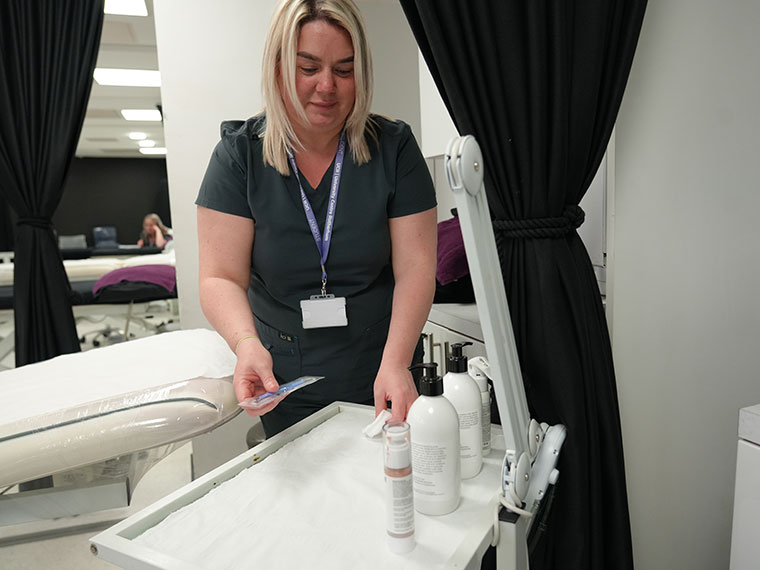
Another standout feature is University Centre Rotherham’s commercial salon, Innovate S65, where students gain hands-on experience working with real, paying clients. These sessions form part of the course’s case study requirements, allowing learners to build both confidence and a professional portfolio.
“There’s always a constant flow of clients, which is really good. A lot of places I’ve trained before it’s been quite hard to get clients in. It also helps that we as students are offering these advanced treatments to clients for such affordable prices, much less than what you’d pay in a normal salon.”
Developing advanced skills
Having previously specialised in spa treatments like facials, massage and electrolysis, the level 4 diploma has enabled Lucy to move beyond traditional beauty therapy and develop skills in more advanced, results-driven treatments.
The course has introduced Lucy to new techniques, technologies and approaches within aesthetics. Hands-on training and practical sessions have allowed her to build confidence in delivering these treatments safely and effectively, while also understanding the science behind them.
“The course has helped me realise how they’re all really good treatments in their own way and how they will benefit my clients. There’s more to it than just practicing the treatment and it’s not what people might expect from a beauty course.“
“Because they’re more advanced treatments, there’s a higher standard of procedure to follow and a more thorough consultation. We’re working with blood and chemicals so the hygiene and health and safety side has to be at the highest level so we don’t cross contaminate or cause side effects.”
The value of accredited training
Having worked in the beauty industry for many years, Lucy is well aware of the wide range of short courses available in advanced treatments. However, she believes that taking the time to complete a full, accredited qualification like the level 4 diploma makes a significant difference.
“These treatments are sometimes offered as one- or two-day courses, but they’re not ideal as they don’t always come with proper accreditation or depth of learning. I wanted to do it properly and learn not just how to perform the treatment, but the theory, anatomy and safety considerations behind it.”
By studying over a longer period and completing case studies with real clients, she feels far more confident in her abilities and better prepared to return to the industry.
“I’d definitely encourage other therapists to invest in a full qualification,” she adds. “It gives you credibility and confidence that you just don’t get from a couple of days’ training.”
Lucy“It’s so flexible and the staff all understand that most of us on the course have other commitments.”
Balancing study with work and family commitments
As a mum of two, studying alongside family commitments plus a full-time role in social care hasn’t been without its challenges. But Lucy has embraced the opportunity to return to learning in a flexible way that fits her lifestyle.
The Level 4 diploma only takes 18 weeks to complete and is delivered part-time one day a week. Learners do their theory in the morning, practical sessions in the afternoon, followed by treatments on clients to complete their case studies.
This means Lucy can still afford to work and do the school runs without sacrificing doing something for herself that’s creative and different from her day job.
“It’s so flexible and the staff all understand that most of us on the course have other commitments.”
Looking Ahead
While she has no plans to leave her role in social care, Lucy hopes to reintroduce beauty into her life on a part-time basis by offering treatments from home.
“I’d love to have a summerhouse built in my garden to have a salon at home,” she says. “But I still love what I do in the charity sector and I’d also like to bring beauty training into where I work. I already deliver training for our service users to get them rent ready to deal with tenancies, budget and live on their own but I’d love to be able to bring in the beauty side too.”
Lucy’s advice to others
Reflecting on her journey, Lucy believes that returning to education has been an important step in keeping her skills relevant and her options open and encourages other beauty therapists to remember they’re never too experienced to learn something new.
“The industry keeps moving and it’s important to move with it. Doing an advanced qualification will give you more profitability, more trust, more benefits to your clients and a better outcome.”
Find out more about Hair and Beauty courses at University Centre Rotherham